Astor PressMMXXVI
Free on Mac · Research Preview

You can learnanything.

Name the subject. The press writes you the book — your level, your voice, plates engraved to order.

The most scientific way to learn ever set on a screen — evidence is its spine.

The CredoLeaf ii

Everyone asserts it.
The press engineers it.

Every complex idea in the universe is built from simpler ones — general relativity is geometry, taken patiently; the Fourier transform is a circle, asked the right question. What made these subjects feel closed to you was never the ceiling of your mind. It was the ordering of the stairs.

The press orders the stairs. The climbing is still yours — where the book asks you to guess before it answers, guess. That isn't friction. That's the mechanism.

2
The ScienceLeaf iii

Apps sell the feeling of learning. The press is built on the fact of it.

+50% Long-term retention, one week later — retrieval practice over elaborate study. The students predicted the opposite. Science · 2011
+0.46σ Measured learning from working through it instead of watching it — while feeling like you learned less. The feeling lies. Harvard · PNAS · 2019
5642 A week on — what testing yourself keeps, against what rereading keeps. Every volume ends in unanswered questions. Psychological Science · 2006
g=0.55 The measured gain from committing to a guess before the answer arrives. The book asks before it tells. Edu. Psych. Review · 2018

Every volume is set in engineered difficulty — the question before the answer, the problem after the chapter, the wrong belief named first.

What the press refuses No streaks. No badges. No leaderboards. No autoplay.
The Method — every claim, with its receipts.
3
A Volume, OpenLeaf iv

You name the subject. The press binds the volume.

Chapters in order, plates where a picture earns its place, mathematics set in real LaTeX.

Fig. 1 “The Weight of Stone” — commissioned by one reader, drafted by the press, kept on their shelf.
The Astor reader open to The Weight of Stone — an engraved plate of the Pantheon above the title page.
4
The MarginLeaf v

Textbooks talk at you. This book writes back.

Highlight a sentence and the volume replies — on the page, in your copy, for good.

Fig. 2 The reader asked how the temperature is controlled; the volume replied on the spot.
A highlighted sentence in the reader, with the book's reply set in the margin.
5
The PlatesLeaf vi

Every figure, engraved to order. Drawn so the idea catches.

Cut for the sentence beside it — no two books share a plate.

An engraved plate of a resonance test, cut for a chapter on why structures fail.
Pl. I A resonance test, for a chapter on why structures fail. Astor del. · gpt-image-2 sc.
An engraved plate of the brain's reward circuit, labeled in place.
Pl. II The reward circuit, for a volume on habit. Astor del. · gpt-image-2 sc.
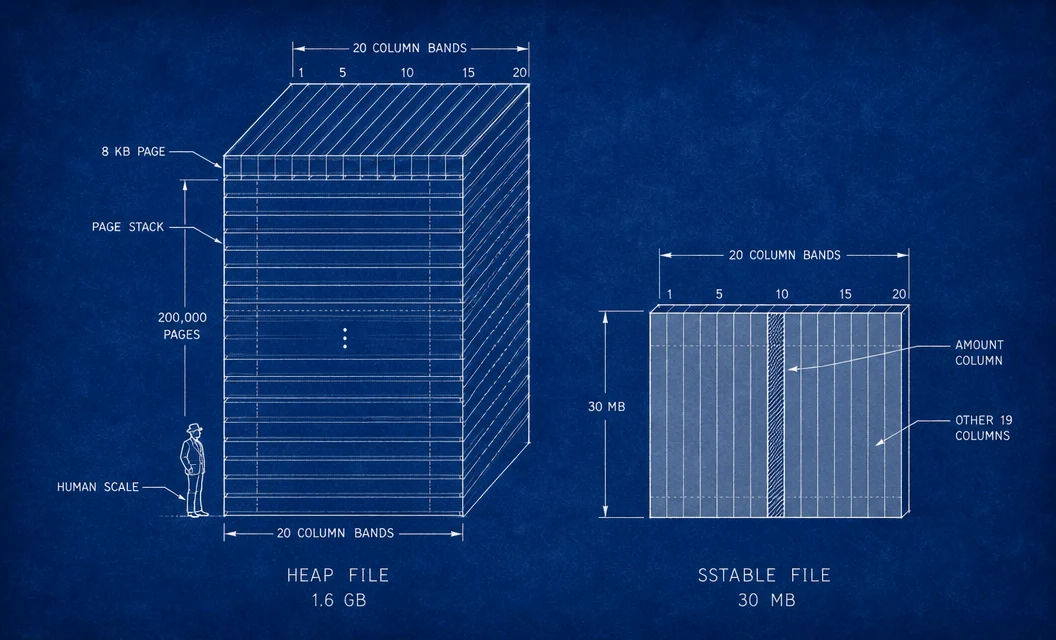
An engraved diagram of database write latency, drawn as a printed figure.
Pl. III Write latency, for a reader who asked about databases. Astor del. · gpt-image-2 sc.
Plate forthcoming Commissioned · MMXXVI
Pl. IV Reserved — the next reader’s subject. Astor del. · gpt-image-2 sc.

None of these plates existed before the page that needed them. None will appear in anyone else’s book.

6
The ShelfLeaf vii

A feed forgets what it fed you. A shelf keeps.

Every volume you commission stays bound, annotated, and yours — a library that grows the way you do.

The Astor library — a reader's shelf of commissioned volumes set on cream paper.
Fig. 3 One reader’s shelf — twenty-three volumes in.
7

Designed for understanding, not engagement.

A feed optimizes for the next tap. A book optimizes for what’s left in you a month later.

Free on the Mac App Store